Three Suitcases
Every year, a few weeks before school starts, I pack three suitcases for Haiti.
For most of the years we have been running our school, I packed them and then flew with them straight to Haiti. I would arrive in Anse A Galets, on La Gonâve in the middle of August and stay until the school year was well under way, usually until the middle of September. Arriving in mid-August meant I could be there for inscription, our enrollment day, when families line up at our gate early in the morning hoping for a place for their child in our new first-level class. It also meant I could help get everything ready for the first Monday in September, when school in Haiti begins.
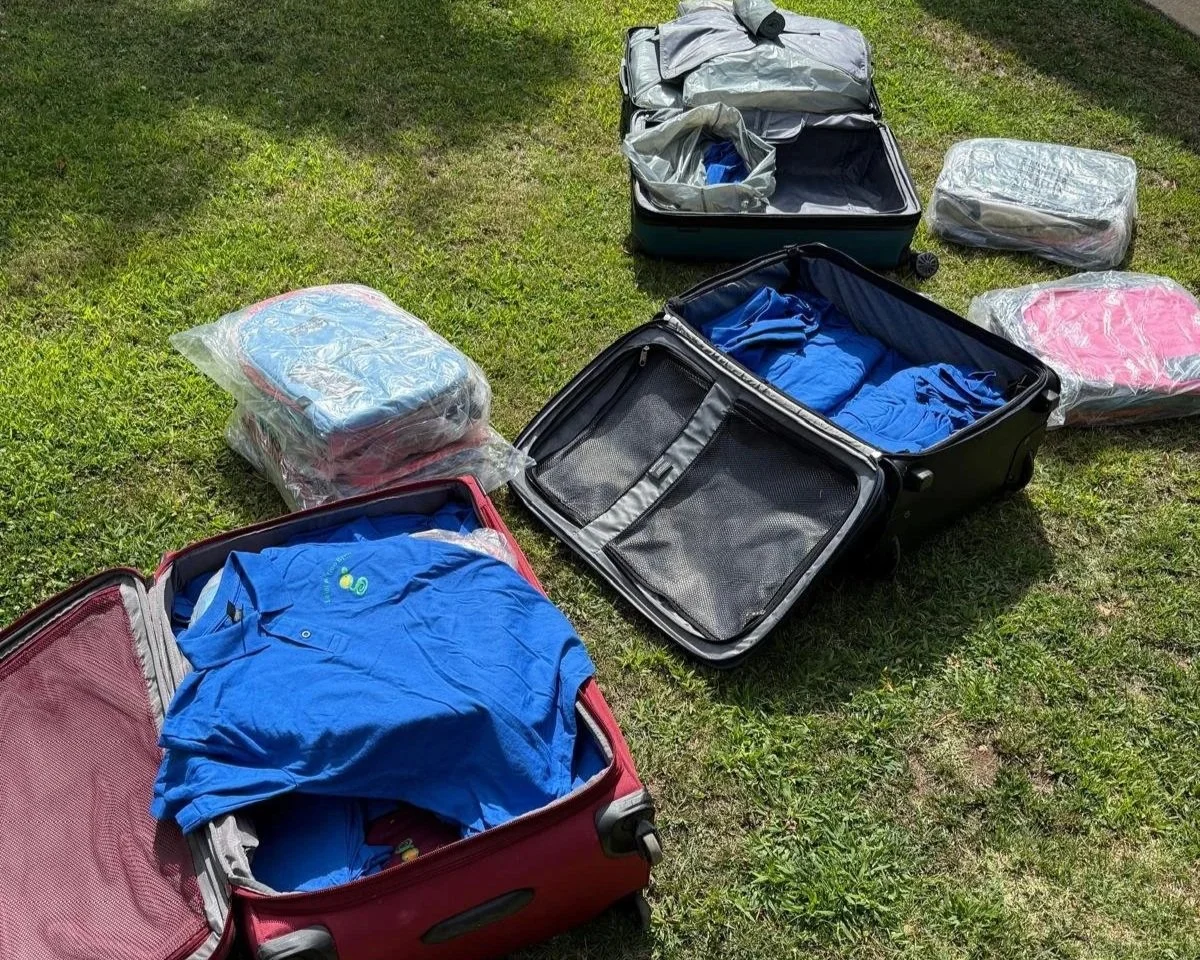
The suitcases are full of what the school needs to start the year. Most of the space goes to uniforms. Every one of our students wears a royal blue polo shirt with our logo on the chest. In our very first year we had the shirts made in Port-au-Prince, but the quality wasn't good and I wasn't happy with them, so since then I've ordered them in the United States and had the logo silkscreened on. Our staff wear them too. The teachers, the kitchen staff and the facilities crew all get a polo shirt, so everybody who works at Pi Gwo Byen is wearing one. Every student also gets a backpack.
Whatever room is left goes to things that are harder to find in Haiti. Some years that has meant shoes, or sanitary napkins. There are always whiteboard markers, because the teachers really like having them. Larger things travel another way. A few years ago we sent whiteboards through a network of people who ship goods to Haiti. A group of us coordinate together, and everything goes to a warehouse in Florida and then onto a private flight to La Gonâve. I've used that network many times over the years, but I always take at least two suitcases myself, and usually three.
The suitcases themselves never come back. People donate them to us, and once they're unpacked, members of our staff adopt them and use them as a closet for their own clothes, a kind of dresser. So every year I'm packing different suitcases.
I haven't been able to travel to Haiti for the last three years because of the unrest. So now I fly to Santo Domingo, in the Dominican Republic, and the suitcases make the rest of the journey without me.
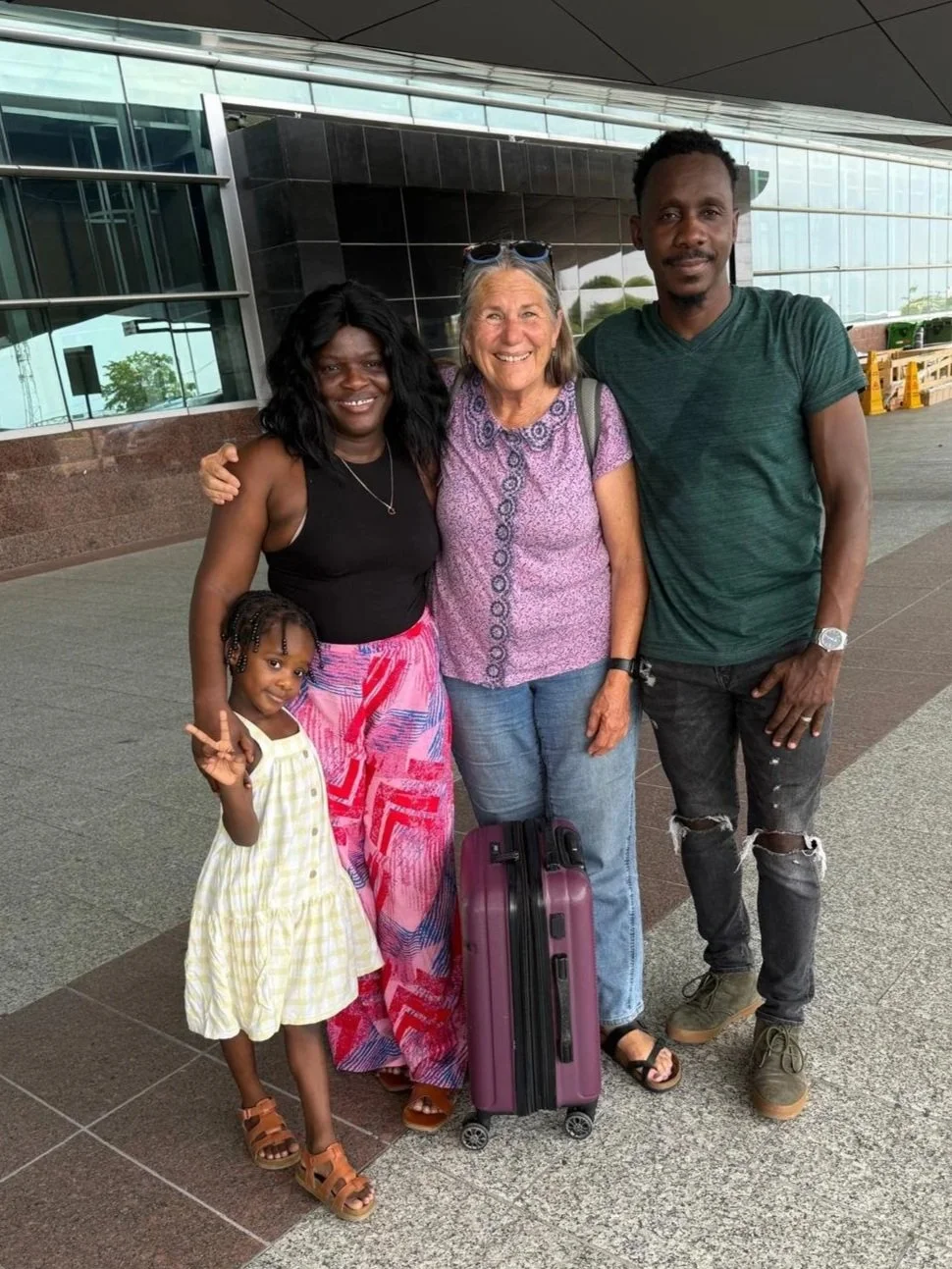
One of our former cooks, Dalise, lives in Santo Domingo with her husband, Akus. When I arrive, Akus calls on his brother and some of his cousins, who come into the city to pick up the suitcases. We pay them to carry them across the border and through Haiti to La Gonâve.
That is not an easy thing to do. The roads are often blockaded by gangs, and there are bandits on the highways who stop travelers and want to look at what they're carrying. Sometimes they take some of it. Sometimes you hand them a little money and that satisfies them. Occasionally the men have been able to put the suitcases on a bus, but buses are often stopped too, and people are robbed on board. So they have to be very discerning about how they travel and which way they go at any given time. There is a kind of underground network of people who let everyone know when a route is blocked, so you don't go that way, you go this way instead. It's a really interesting situation. Thankfully, every year, all three suitcases have arrived at our school.
This year I left San Francisco at 10:40 at night on a red-eye, changed planes in Philadelphia, and landed in Santo Domingo at one o'clock the next afternoon. I stayed two nights with Dalis and Akis. Dalis is in nursing school now, and her child is in kindergarten. It was wonderful to sit down to a Haitian meal again. Dalis made diri ak sòs pwa, rice with bean sauce, which usually comes with meat. She knows I don't eat beef or pork, so she cooked chicken for me.
Before I handed the suitcases over, we made a change. The airline limit was seventy pounds a bag, and I had packed all three to about sixty-five. We unpacked one of them and divided everything between the other two, which left each of those close to a hundred pounds. They were much heavier, of course, but the weight mattered less than being able to move. Two suitcases are easier to manage on the road than three, and this way each person had one suitcase that was their responsibility.
Two days after I arrived, I was on a flight home. I left at noon and got back around 11:30 that night, with the time difference in my favor on the way home.
This year it took eleven days from the time I handed the suitcases over to the time they reached our school. The year before, it took two weeks. I don't remember how long it took the first year we did it this way. It's a tricky situation, and by the time the hardest part begins, I'm already home. I just fly in.
It does come at a price. My airfare to Santo Domingo costs about the same as it would to fly to Port-au-Prince, but paying to have the suitcases carried from Santo Domingo makes everything a little trickier. We do it anyway, because we run a school, and that's what we do.
It was a good trip, and a fairly easy one, which is kind of amazing when I think about everything it involves. Still, I look forward to the year I can do it the old way again, and fly straight to Haiti with the suitcases myself. I'm dying to see the school, to be there for inscription, and to help get the school year going. I just miss all of it.
Every uniform, backpack and whiteboard marker in those suitcases is paid for by people who give to Greater Good Haiti. If you'd like to help fill next year's suitcases, you can make a donation at greatergoodhaiti.org/donate.