How 60 cents a day can give a child on La Gonâve everything they need to succeed in our school.
When people hear about our work on the island of La Gonâve, one of the first questions they ask is: what does it actually cost to educate a child in Haiti?
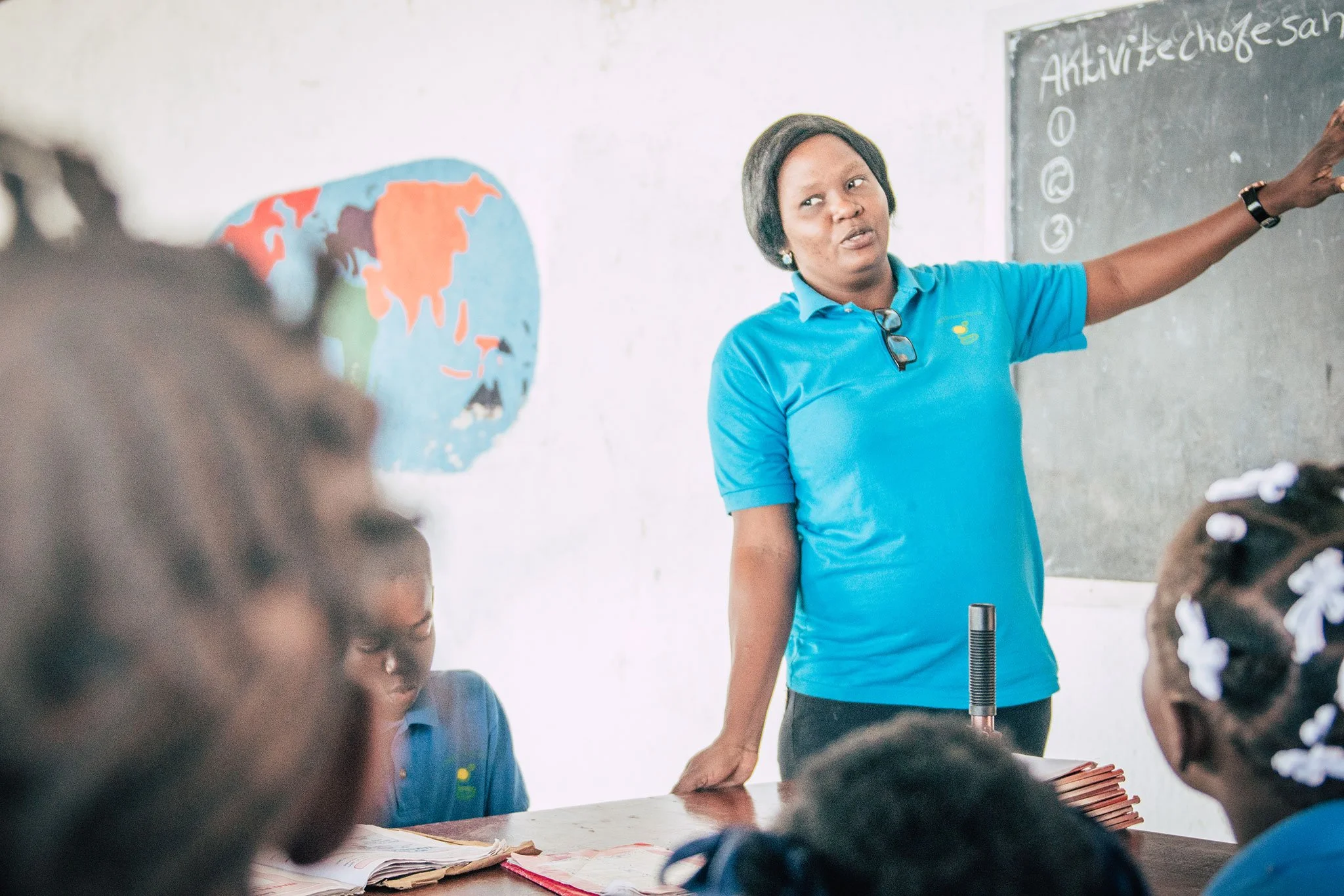
A child in our elementary program at Pi Gwo Byen receives a full year of education by a qualified teacher who knows their name. Not just a seat in a classroom, but everything they need to thrive: all their books and supplies, a school uniform and backpack, a pair of shoes, and a hot lunch every single school day.
$225 a year — $18.75 a month, that’s around $0.60 a day.
For many of our students, that lunch is the only hot meal they eat. We also extend the nutrition program throughout all school holidays.
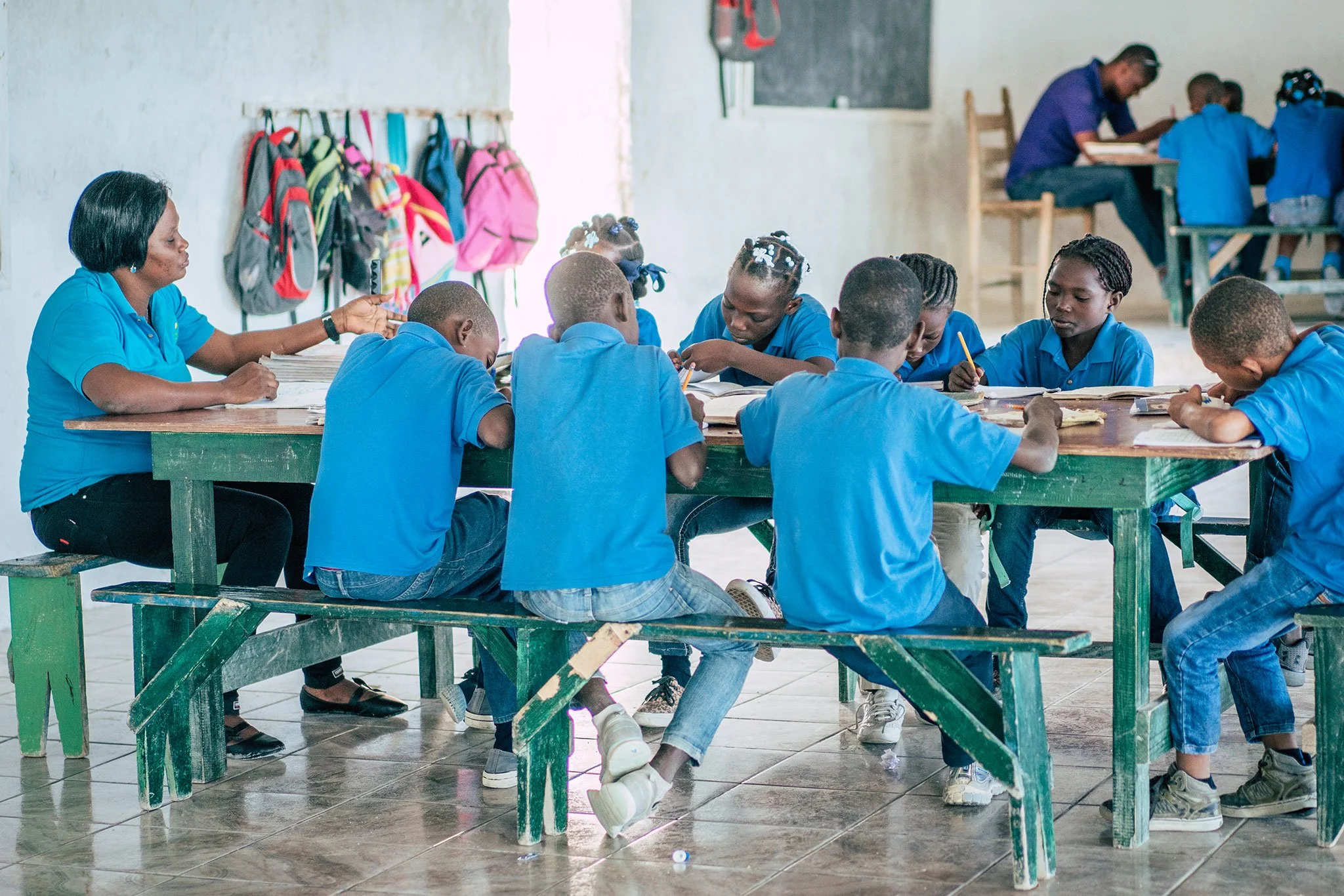
Small Classes, Big Results
Since inception, our classes have beencapped at 12 students. That might sound like a luxury, but it is the foundation of everything we do. When a teacher is responsible for just 12 children, they can track every student’s progress, notice when someone is struggling, and build the kind of relationship that motivates a child to keep showing up. In the 2025/26 school year, because of aninflux of refugees from the continuing unrest on the mainland, we have opted to raise class sizes to 15 so that we are folding 3 refugee students, per class into our school
Small classes are one central tenet to our program, and another is that from the beginning we have been teaching in Kreyol first, rather than formal French, students must learn to read and write in their first language which is Haitian Creole/Kreyol AyisienneThis has been especially impactful for our students who arrived having had no formal education prior. Our three-level accelerated program takes children who have never attended school — aged 9 to 12 — and covers the equivalent of first through sixth grade. By the time they finish, they sit the national matriculation exam that determines whether they can enter secondary school.
In Haiti, the national pass rate for this exam is roughly 20%. Our pass rate every year, since we adjusted our bilingual curriculum in 2011, remains at 100%.
Directors of other schools in Anse-à-Galets have asked us how we do it. The first year they thought it was a fluke. The second year they scratched their heads. The third year the questions came. Through conversations and time, we shared our insights, such assmall classes, strong relationships, proper nutrition, and respect. We do not use corporal punishment. We treat our students with dignity. When children feel safe, fed, and valued, they learn.
What Happens After Graduation
After passing the exam a new chapter begins. Our graduates choose a secondary school of the family’s choice. and we cover the full cost: tuition, textbooks, uniforms, shoes, backpacks and exam fees.. This secondary scholarship costs approximately $500 per year per student, still less than $1.40 a day.
We did not always cover the full cost. In the early years, we tried paying half the tuition and asking families to cover the rest. The result was painful: students dropped out because their families simply could not pay. We tried asking parents to buy books; they could not afford them, or had to share with other families, which created complications.
Year by year, we learned. And now we provide full scholarships because it is the most effective approach that works. Every gap in support is a gap through which a child can fall.
Today, we support 126 students in secondary schools, 11 in university or vocational education, 30 students in Adult Literacy, and 90 children in our elementary school program That’s roughly 250 people whose education depends on the generosity of people like you.
A Ripple Effect Across the Community
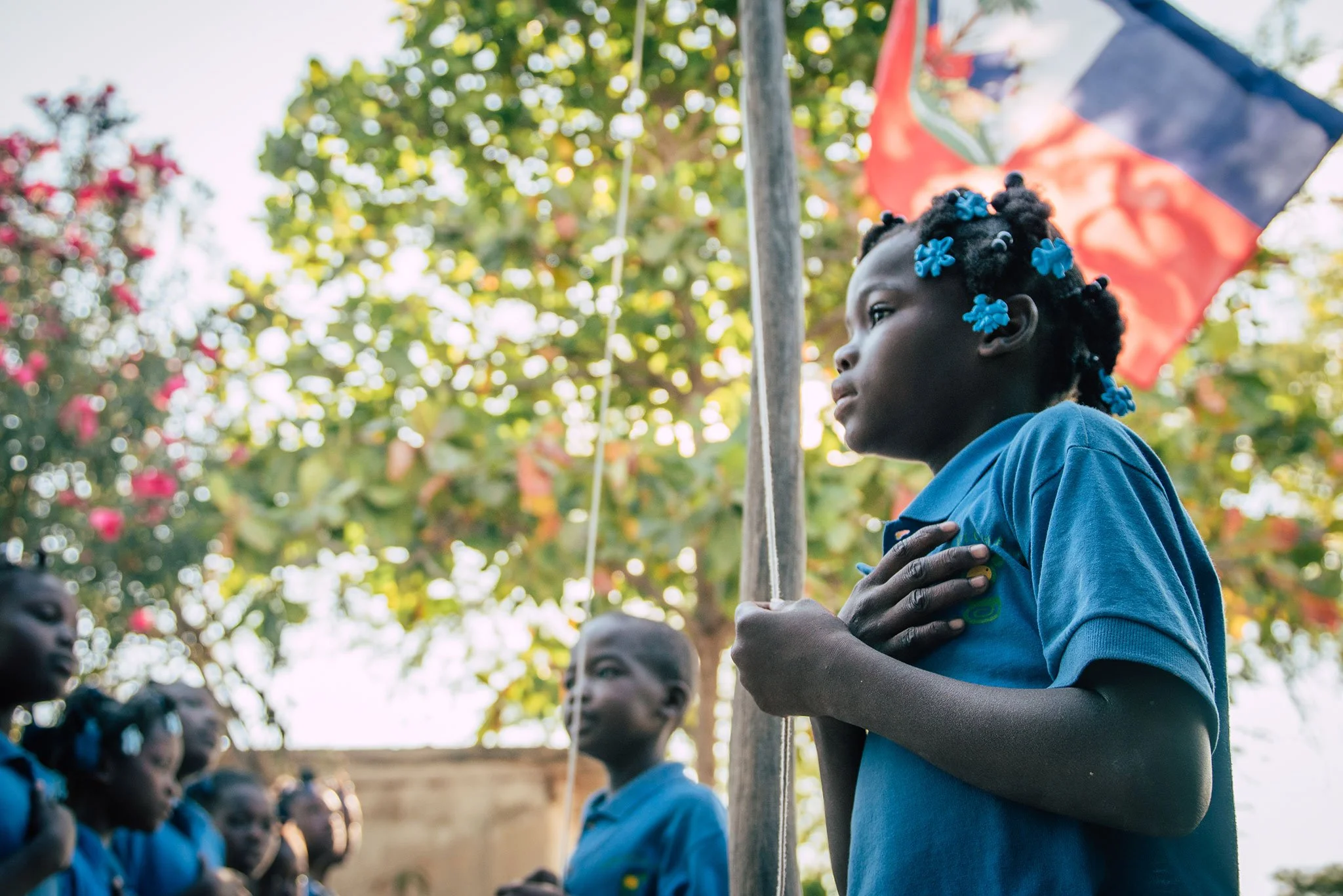
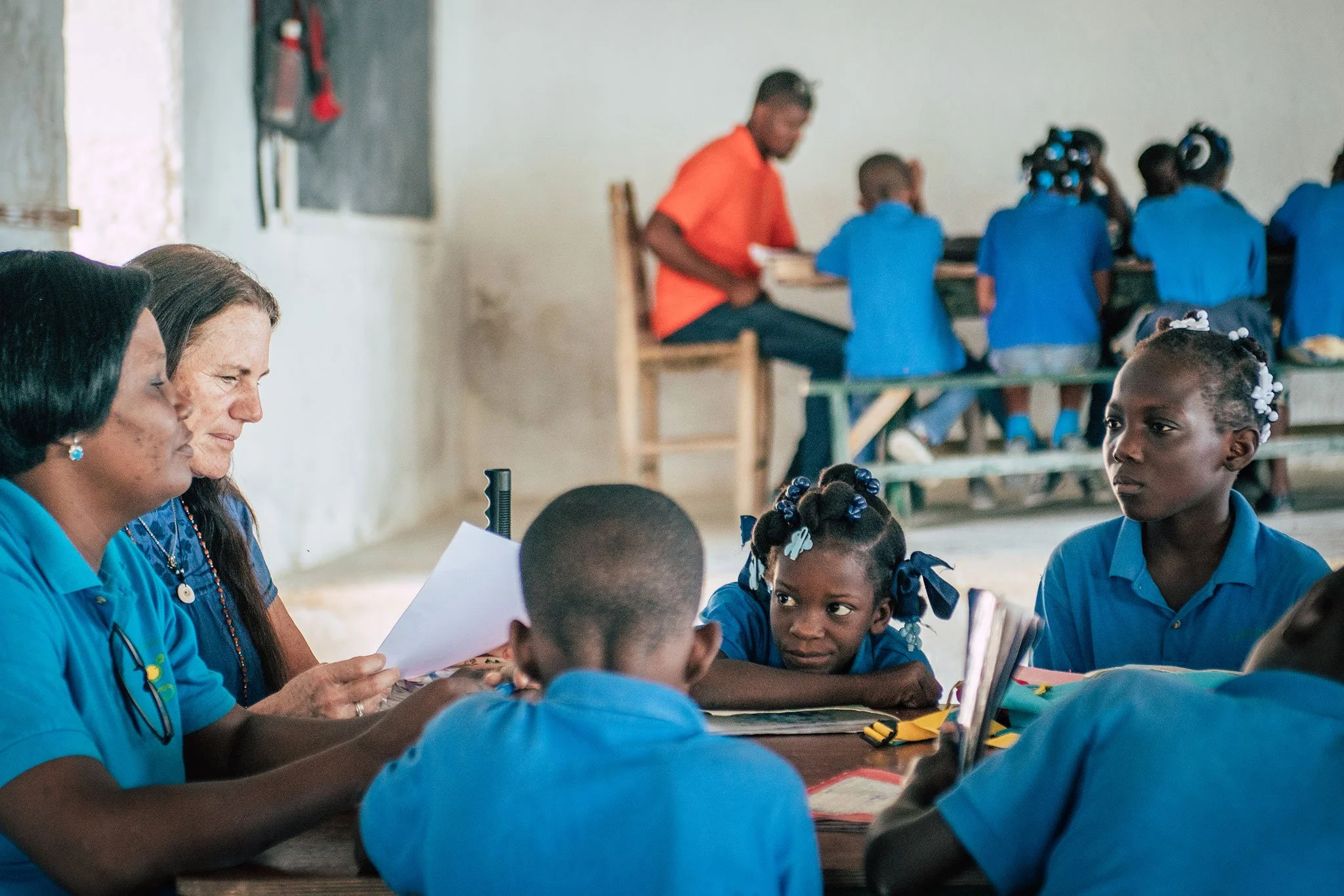
Something remarkable has happened over the years. The practices we introduced at Pi Gwo Byen — serving hot lunches, refusing corporal punishment — have spread. Other schools in Anse-à-Galets have followed suit. Almost all now serve lunch. Many have stopped using physical punishment. Our teachers/Assistant Directors, Rosemanie and Benira, who have been with us since the earliest days, now visit secondary schools, pay tuitions, and participate in the local consortium of schools run by the Ministry of Education.
We set out to educate children. We ended up helping to change the culture of education in the entire community.
We Need Your Help Now More Than Ever
The climate for fundraising has shifted, we will be honest with you: we are facing a budget shortfall. The number of students we support grows every year, and our funding has not kept pace. We are now having difficult conversations about whether we may need to reduce the breadth of our scholarship programme — conversations we never want to have.
Right now, our recurring monthly donations total just over $13,000 per year. That is a wonderful foundation, but it is not enough to sustain 250 students.
Our average monthly donation annual* not withstanding) is $25 a month. That is enough to support one of the students in our school for all they need to succeed for 365 days.
Here is what your donation can do:
$225 sends a child to our school for a full year.
$500 keeps a graduate in secondary school for a full year.
$18.75 a month is all it takes to cover one child in our program.
$42 a month covers the full cost of scholarship for a secondary school student..
No amount is too small. No amount is too large. Whatever you can give helps us keep our promise to every child who walks through our gate.